Press release
World’s First Consortium on Human Reproduction in Space Launches
Symposium Series Announced to Develop Research Roadmap
AMSTERDAM, 23/09/2025 – A new global consortium is being established to tackle one of the most profound questions in space exploration: can humans safely reproduce beyond Earth? The Space Reproduction Roadmap Consortium (SRRC), initiated by SpaceBorn United, is uniting scientists, technologists, ethicists, and policymakers to develop a globally- cooperative, long-term research roadmap for enabling human conception, pregnancy, and birth in space.
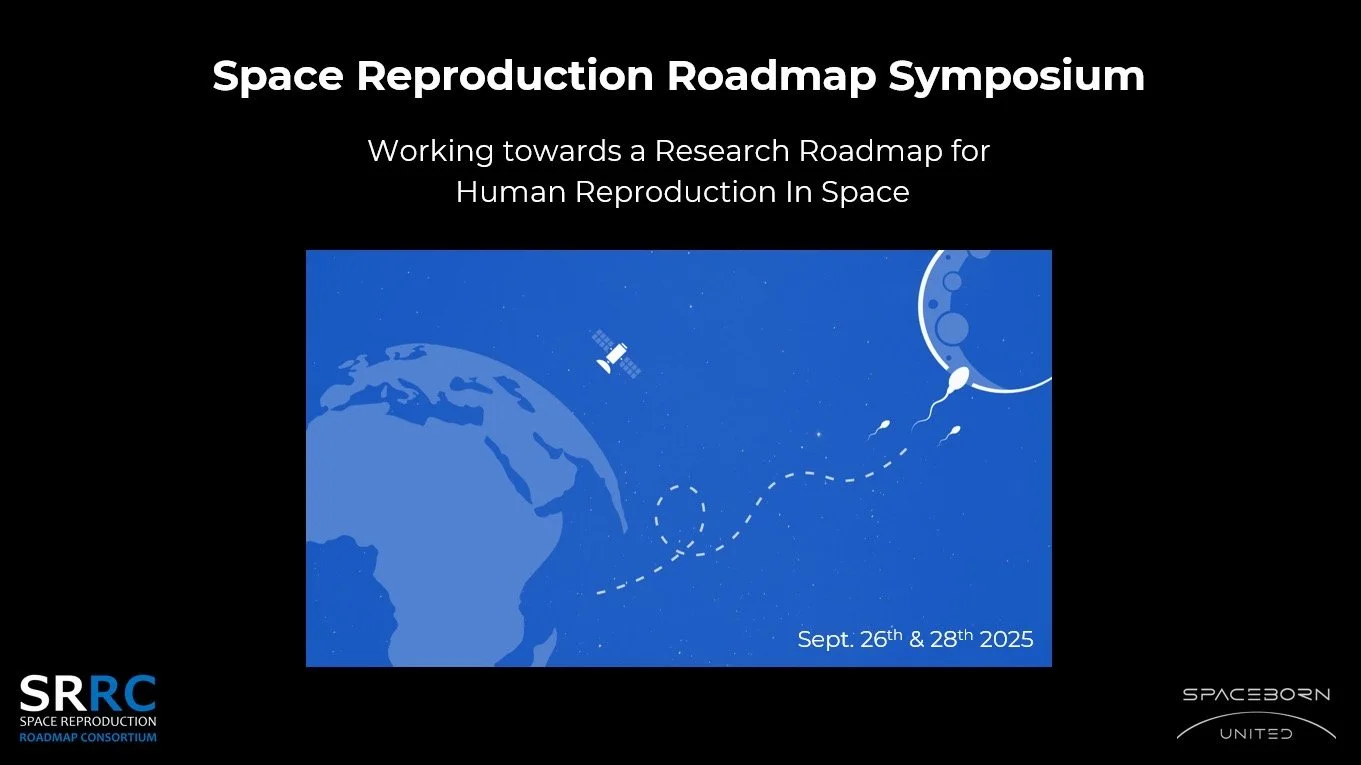
The inaugural Space Reproduction Roadmap Symposium will take place on the 26th and 28th of September 2025. This first-of-its-kind event brings together leading experts in reproductive medicine, fertility research, space biology, space technology, bioethics, geopolitics, and law. It will mark the launch of a series of symposia designed to shape a responsible global strategy for human reproduction in space. Participating experts and organizations are invited to join the consortium and integrate existing space reproduction research and roadmap approaches.
Why reproduction in space matters
In a world marked by political turbulence, polarization, and climate decline, it is vital to hold on to hope and invest in uniting visions for the future. As humanity moves toward increased commercial presence in space, scientific lunar bases, and future missions to Mars, long- term settlement beyond Earth is becoming a concrete goal. Space research already delivers breakthroughs in agriculture, medicine, and technology with direct benefits on Earth, while the vast resources of space offer promising answers to scarcity and energy needs. Settlements beyond Earth also provide resilience against existential risks such as climate disruption or nuclear conflict.
Within this context, the question of reproduction becomes unavoidable. Permanent settlements beyond Earth will only be possible if safe ways to conceive and raise children in space can be established. Yet despite decades of human spaceflight, no conception has occurred in orbit, and systematic research into this domain is still at an early stage.
Space poses formidable challenges to reproduction. Partial and microgravity disrupt basic physiological processes, radiation increases genetic risks, and environmental factors like stress, nutrition, and circadian rhythm shifts may influence fertility and pregnancy. While some astronaut health data exists, almost nothing is known about how these conditions affect reproductive organs, embryonic development, or childbirth. Addressing these knowledge gaps requires an unprecedented, interdisciplinary effort.
“Without the ability to reproduce, humanity’s presence in space will always be temporary,” said Dr. Egbert Edelbroek. “ The symposium series initiates a collaborative and ethical framework needed to turn this bold vision into a research-driven reality.”
A roadmap for science and society
The first symposium will identify core challenges across all disciplines, explore possible technological and medical solutions, and estimate realistic timelines. One month after the event, the symposium partners will publish a white paper outlining initial priorities and recommended milestones.
The roadmap seeks to not only serve long-term space ambitions but also contribute to medical breakthroughs on Earth. Research into reproductive resilience in extreme environments is expected to improve fertility treatments, IVF success rates, and maternal health worldwide.
About the symposia partners
The Space Reproduction Roadmap Consortium is being developed to create a coordinated and ethically grounded approach to research human reproduction in space and integrate existing research and related roadmaps. The consortium aims to realize this goal through a series of international symposia, where subject matter experts from multiple fields contribute to a practical roadmap for the global research community.
Symposia partners include:
• SpaceBorn United: pioneering IVF and embryo culture technologies in space. https://www.spacebornunited.com
• Cranfield University (Astrobiology and Space Biotechnology): extensive expertise in aerospace systems and biomedical research in space. https://www.cranfield.ac.uk/people/professor-david-cullen-806115
• UZ Gent (Reproductive Medicine Research Group): advancing and applying assisted reproductive technologies. https://www.ugent.be/ge/hsr/en/research/reproductive-medicine
• Progenesis: leading specialist in fertility innovation and reproductive medicine. https://progenesis.com
• SES (Space Exploration Strategies): advancing space commerce and sustainability.
https://www.sestrategies.org
• EarthLight Foundation: promoting humanity’s expansion into space through
cultural and scientific initiatives. https://earthlightfoundation.org
1st Symposium participants
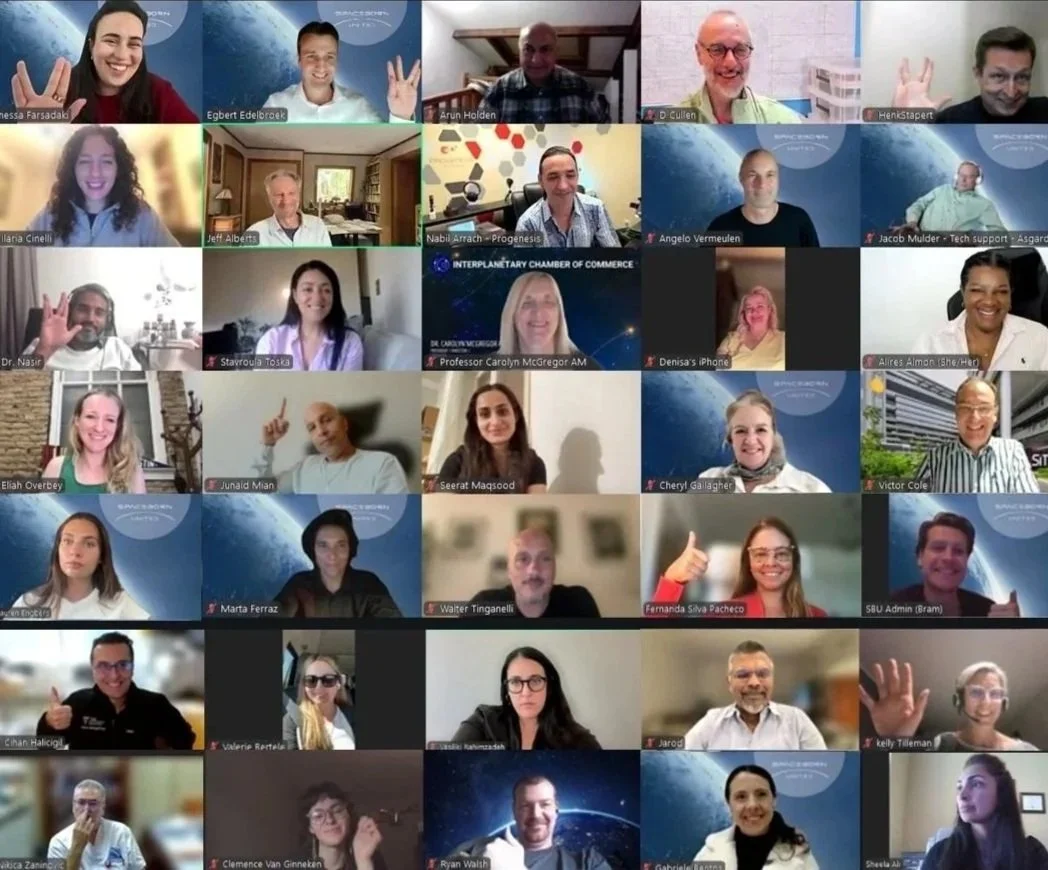
Jeffrey Alberts, Sheela Ali, Alires Almon, Nabil Arrach, Afshin Beheshti, Steve Behram, Valerie Bertele, Ilaria Cenelli, Rowena Christiansen, Victor Cole, David Cullen, Sanketh Dhumal, Egbert Edelbroek, Vanessa Farsadaki, Marta Ferraz, Cihan Halicigil, Varsha Jain, David Klein, Jarod Lopez, Seerat Maqsood, Rafael Elias Marques, Christopher Mason, Carolyn McGregor AM, Junaid Mian, Santiago Munné, Adeel Nasir, Eliah Overbey, Fernanda Pacheco, Denisa Protopopescu, Henk Stapert, Kelly Tilleman, Clémence Van Ginneken, Angelo Vermeulen, Ryan Michael Walsh, Nikica Zaninovic.
Media Contact
Dr. Egbert Edelbroek
egbert.edelbroek@spacebornunited.com
+31 644160058